



1. Product Introduction
1.1 A Dedicated Gateway for Automated HTTPS and Cryptographic Processing
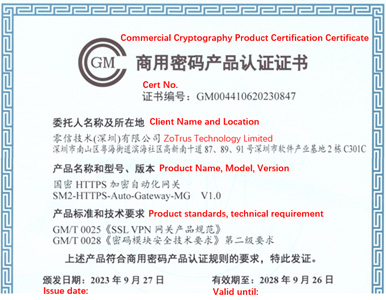
Zotrus HTTPS Automation Gateway is an enterprise-grade hardware security gateway for public-facing websites and Web applications that has passed the SSL Security Gateway class Security Level 2 China Commercial Cryptography Product Certification. It moves certificate supply, certificate lifecycle management, and HTTPS cryptographic processing from individual Web servers and distributed security appliances to a dedicated gateway layer.
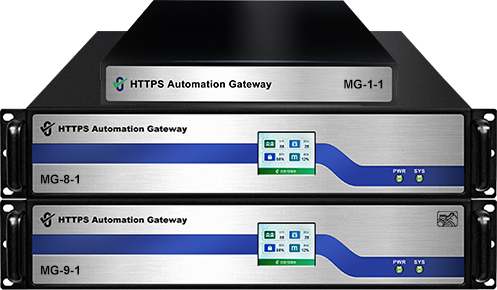
Traditional HTTPS deployment requires administrators to obtain certificates, install certificates and private keys on Web servers or security appliances, configure TLS services, and periodically renew and replace certificates. Legacy Web servers, packaged applications, and vendor-managed platforms may not support ACME clients or may be impossible to modify. Installing an ACME client on every origin server is therefore not a viable automation strategy for many existing environments.
Zotrus HTTPS Automation Gateway changes this approach by moving HTTPS encryption and certificate management from individual Web servers to a dedicated gateway. Deployed in front of existing Web infrastructure, the gateway automatically manages SSL/TLS certificates, terminates external HTTPS connections, processes supported cryptographic algorithms, and forwards the built-in WAF cleaned traffic to the original Web servers.
Original Web servers do not need to install TLS/SSL certificates or ACME client software, and do not need to be upgraded solely to support the cryptographic algorithms handled by the gateway. Even legacy systems that cannot be modified or do not support ACME can gain automated certificate management and modern HTTPS capabilities through gateway-side deployment. This architecture enables organizations to modernize website security while preserving existing business applications and infrastructure.
1.2 One Gateway. Multiple Cryptographic Capabilities.
The gateway integrates:
- Automated SSL/TLS certificate application, validation, deployment, renewal, and management.
- Multi-CA certificate supply and automatic switching.
- RSA/ECC and SM2 cryptographic algorithm support.
- Supported hybrid post-quantum key exchange algorithms.
- High-performance SSL/TLS encryption and decryption acceleration.
- HTTPS reverse proxy, traffic forwarding, and load balancing.
- Built-in Web Application Firewall protection.
- Client certificate authentication and secure delivery capabilities.
The gateway uses dedicated hardware cryptographic acceleration and an optimized software platform to process encrypted Web traffic efficiently. It is designed for organizations operating multiple websites, enterprise Web applications, government platforms, financial systems, public cloud environments, and other business-critical Web infrastructures.
2. Why HTTPS Automation Gateway?
2.1 Your Existing Web Infrastructure Should Not Have to Be Rebuilt for HTTPS Automation.
Organizations face several challenges when implementing and maintaining HTTPS across multiple websites.
◆ Complex SSL Certificate Management
SSL certificates must be obtained, installed, configured, monitored, renewed, and replaced. Manual operations increase administrative workloads and create the risk of expired certificates and service interruptions.
◆ Legacy Systems Cannot Always Be Modified
Legacy Web servers, packaged business applications, vendor-managed platforms, and mission-critical systems may not support ACME clients or new cryptographic algorithms. Modifying them can introduce compatibility problems, additional costs, and operational risks.
◆ Cryptographic Algorithms Keep Evolving
Organizations increasingly need to support different cryptographic technologies, including RSA, ECC, SM2, and post-quantum cryptography. Upgrading every Web server and security appliance individually is expensive and difficult to maintain.
◆ HTTPS Processing Consumes Infrastructure Resources
SSL/TLS encryption and decryption require substantial computing resources. When Web servers and multiple security appliances independently perform these operations, computing resources are repeatedly consumed by the same cryptographic workload.
◆ Security Appliances Have Different Responsibilities
Firewalls, IPS, WAF, Anti-DDoS systems, and load balancers are designed for different security and traffic management tasks. Requiring every device to independently manage SSL certificates and perform HTTPS decryption increases complexity and reduces the resources available for their primary functions.
2.2 A Dedicated Gateway Solves These Problems at the Infrastructure Level.
By centralizing certificate lifecycle automation and HTTPS cryptographic processing, Zotrus HTTPS Automation Gateway modernizes existing infrastructure without requiring origin-server changes. Multi-CA automatic switching adds alternative certificate-supply paths, while existing security appliances remain focused on their specialized inspection and traffic-management functions.
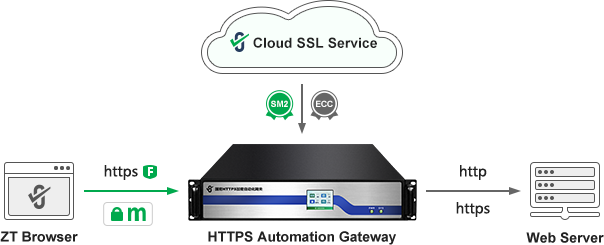
Organizations can introduce automated HTTPS, support evolving cryptographic algorithms, and improve infrastructure efficiency without replacing their existing business systems.
3. HTTPS Offloading and Traffic Forwarding
3.1 Let Every Security Device Do What It Does Best.
In traditional enterprise network architectures, encrypted HTTPS traffic may pass through multiple security appliances, including firewalls, Intrusion Prevention Systems (IPS), Web Application Firewalls (WAF), Anti-DDoS systems, and load balancers. When each device independently performs SSL/TLS decryption, the same cryptographic workload is repeated across multiple devices. Each device may also require separate certificate installation, private key management, and cryptographic algorithm upgrades.
Zotrus HTTPS Automation Gateway provides a dedicated SSL/TLS processing layer to centralize these operations, greatly reduce the cryptographic processing load on existing cybersecurity devices.
◆ Dedicated SSL/TLS Offloading
The gateway handles external HTTPS encryption and decryption, including supported RSA/ECC, SM2, and hybrid post-quantum cryptographic algorithms. After terminating HTTPS connections, the gateway forwards traffic to the configured security service chain or backend infrastructure according to the deployment architecture.
◆ Existing Security Devices Return to Their Core Responsibilities
- Firewall: Network access control based on IP addresses, ports, and protocols.
- IPS: Intrusion detection and prevention through traffic inspection and attack pattern analysis.
- WAF: HTTP application-layer inspection and protection against Web attacks.
- Anti-DDoS: Detection and mitigation of distributed denial-of-service attacks.
- Load Balancer: Distribution of application traffic among backend servers.
The gateway provides the dedicated SSL/TLS processing capability, while existing security devices can concentrate their computing resources on their specialized security functions.
◆ Benefits of Dedicated HTTPS Offloading
- Avoid repeated SSL/TLS decryption across multiple devices.
- Centralize SSL certificate and private key management.
- Reduce cryptographic processing pressure on existing servers and security appliances.
- Introduce new cryptographic algorithms without requiring every backend system to implement them independently.
- Simplify certificate renewal and cryptographic maintenance.
- Improve the flexibility of enterprise security infrastructure.
3.2 A More Efficient Security Architecture
The gateway can be deployed before existing security appliances, with decrypted traffic forwarded through the configured security service chain.
Existing security devices remain in place and continue providing their respective protection functions. The architecture can be adapted to the organization's network topology, security policies, and traffic inspection requirements.
4. Automated SSL/TLS Certificate Lifecycle Management
From Certificate Application to Deployment and Renewal, Automatically.
Zotrus HTTPS Automation Gateway integrates a built-in ACME client and connects to the Zotrus ACME service, then connect to Zotrus certificate infrastructure and other supported CA supply channels through the integrated CA API. The gateway automates certificate requests, domain validation, issuance retrieval, deployment, renewal, and HTTPS service activation. ACME automation runs at the gateway; the original Web servers do not need ACME clients or native ACME support.
After administrators configure website domains and backend server addresses, the gateway can automatically perform the following operations:
- Certificate Application: Initiate certificate requests for configured website domains.
- Domain Validation: Complete the required domain control validation process.
- Certificate Issuance: Retrieve issued certificates from Zotrus ACME service.
- Certificate Deployment: Automatically install and configure certificates on the gateway.
- Certificate Renewal: Monitor certificate lifecycles and renew certificates according to the configured renewal policy.
- HTTPS Activation: Automatically enable the corresponding HTTPS services.
This process significantly reduces manual certificate administration and helps prevent service interruptions caused by expired certificates.
◆ Five Years of Certificate Automation Service
All gateways include five years of dual-algorithm (RSA/ECC+SM2) SSL certificate automation service. Supported certificate types, CA supply channels, and website-domain capacity depend on the selected model and service configuration, up to 255 domains. The five-year term refers to the certificate automation service, not the validity period of an individual certificate.
Individual certificates are issued with their applicable validity periods and are automatically renewed according to the configured certificate lifecycle policy.
◆ Secure Private Key Management
Certificate private keys are generated and protected within the gateway hardware. This avoids manual private-key generation, export, transfer, and installation across administrators, Web servers, and multiple security appliances. Unlike the wildcard certificates commonly used in manual deployment models, the gateway provisions a dedicated certificate and private key for each website, reducing the risks of sharing one private key across multiple sites. It also avoids the hassle of manually distributing and managing private keys.
5. Multi-CA Certificate Supply and Automatic Switching
Reduce Dependence on a Single Certificate Authority.
Certificate automation must do more than automate requests and renewals—it must also make certificate supply resilient. If an automation solution relies on a single CA, an issuance outage, unavailable API, or disruption to that CA's supply channel can bring the automated process to a halt.
Zotrus HTTPS Automation Gateway integrates with multiple international and domestic certificate authorities for supported certificate types. If the default CA or issuance channel cannot complete a request, the gateway can automatically select or switch to another available CA according to configured and supported policies, reducing dependence on any single provider.
Key Benefits
- Support multiple certificate authorities and certificate issuance channels.
- Automate certificate application through supported CA integrations.
- Improve certificate supply resilience.
- Reduce dependence on a single certificate authority.
- Help maintain continuous certificate renewal and HTTPS services.
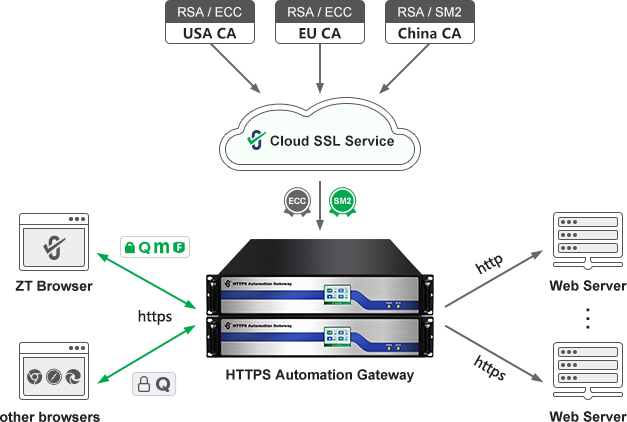
Available CAs, certificate types, automatic-switching triggers, and failover behavior depend on CA integration, domain-validation methods, certificate policies, and service configuration. Multi-CA automation is not simply a wider choice of providers: it creates alternative supply paths that improve the resilience of certificate issuance and renewal.
6. Multi-Algorithm HTTPS and Post-Quantum Cryptography
6.1 Automate Not Only Certificates, but Also Their Application to HTTPS.
Cryptographic algorithms and security requirements continue to evolve. Enterprise Web infrastructure must support different algorithms while maintaining compatibility with existing applications and clients.
Zotrus HTTPS Automation Gateway provides a centralized cryptographic application layer. It not only obtains, deploys, and renews certificates automatically; it also performs server-side HTTPS encryption and decryption at the gateway. Based on configured certificates, algorithm policies, and client capabilities, it provides the appropriate HTTPS connection.
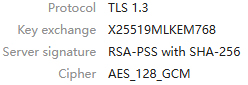
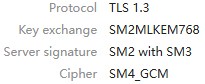
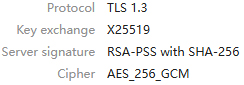
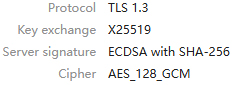
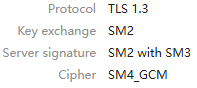
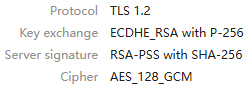
◆ RSA and ECC Algorithm
Supports widely deployed RSA and elliptic-curve cryptographic technologies for globally interoperable HTTPS services.
◆ SM2 Cryptography
Supports the SM2 cryptographic algorithm for compliant HTTPS applications and environments requiring Chinese commercial cryptography. The gateway can handle SM2 HTTPS services without requiring the original Web servers to be upgraded solely to implement SM2.
◆ Hybrid Post-Quantum Cryptography
The gateway supports the following hybrid post-quantum key encapsulation algorithms for TLS: X25519MLKEM768 and SM2MLKEM768. These hybrid algorithms combine traditional cryptographic key exchange with post-quantum cryptographic protection, providing a practical approach to introducing post-quantum capabilities into existing HTTPS infrastructure.
By supporting both X25519MLKEM768 and SM2MLKEM768, the gateway gives organizations flexibility across different cryptographic ecosystems and migration paths. Combined with RSA/ECC and SM2 HTTPS, this diversity helps avoid dependence on a single algorithm family and strengthens long-term cryptographic resilience.
By performing supported TLS cryptographic operations at the gateway layer, organizations can introduce these capabilities without requiring every origin server or business application to implement the corresponding algorithms independently.
6.2 Cryptographic Agility and Resilience
The gateway supports multiple cryptographic algorithms and can adapt HTTPS services to configured certificates, algorithm policies, and client compatibility. Organizations can introduce and manage new cryptographic capabilities centrally, without implementing and maintaining each algorithm separately on every Web server.
This provides organizations with greater flexibility to support different cryptographic requirements and prepare for future algorithm transitions.
6.3. One-Time Upgrade, Two Transformations: Certificate Automation and PQC Migration
One-time HTTPS Automation Gateway upgrade enables enterprises to address two major challenges in their HTTPS infrastructure: certificate lifecycle automation and post-quantum cryptography migration.
Certificate Automation: Replace fragmented, manual certificate management processes with automated certificate application, validation, issuance, deployment, renewal, and multi-CA management. The gateway helps enterprises simplify certificate operations, reduce administrative overhead, and maintain continuous HTTPS protection across their websites and services.
PQC Migration: Prepare existing HTTPS infrastructure for the post-quantum era by introducing hybrid post-quantum key exchange algorithms, including X25519MLKEM768 and SM2MLKEM768. Enterprises can adopt post-quantum cryptography through the gateway without having to redesign their entire HTTPS infrastructure.
By bringing these two transformations together in one gateway, Zotrus helps enterprises modernize their HTTPS infrastructure while reducing deployment complexity and preparing for the next generation of cryptographic security.
7. Built-in Web Application Firewall Protection
HTTPS Automation and Web Application Protection in One Gateway.
Zotrus HTTPS Automation Gateway includes an integrated Web Application Firewall module based on the ModSecurity open-source security system. The WAF inspects configured Web traffic and provides protection against common Web application attacks before requests reach backend Web servers.
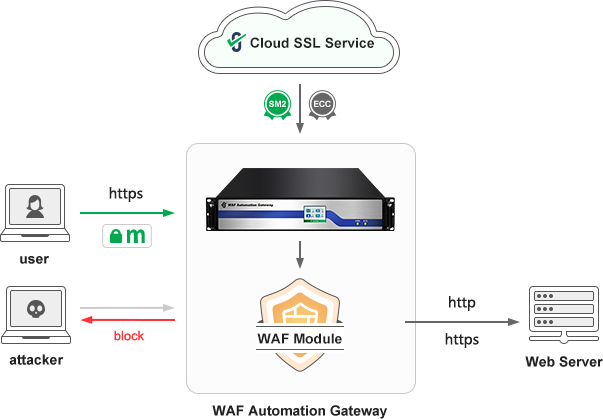
Supported protection capabilities include:
The gateway supports customizable WAF rules and regular rule updates.
◆ Working with Existing WAF Devices
Organizations that already operate dedicated WAF do not need to replace them. The Zotrus gateway takes responsibility for HTTPS termination, certificate and private-key management, and multi-algorithm cryptographic processing. Existing WAF device continue to perform their specialized roles, such as application-layer inspection and protection.
Zotrus HTTPS Automation Gateway can be deployed in front of the existing WAF to perform HTTPS termination and certificate management. The existing WAF can then inspect the forwarded traffic according to the configured deployment mode and security policy.
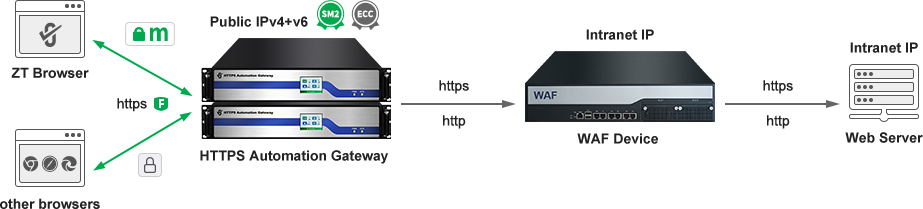
This separates SSL/TLS processing from Web application inspection. Existing WAF no longer need to manage server certificates and private keys independently or continually upgrade their own HTTPS cryptographic processing solely to keep pace with evolving algorithms. They can focus their resources on their core security functions. The placement of decryption and plaintext inspection must be designed according to the network topology and security policy.
8. Additional Security and Traffic Management Capabilities
Beyond certificate automation, HTTPS offloading, and WAF protection, Zotrus HTTPS Automation Gateway provides additional network and application security functions.
8.1 Reverse Proxy and Content Caching
The gateway provides reverse proxy capabilities and short-term content caching through memory and storage mechanisms. Caching frequently accessed website content can reduce backend server workloads and improve response efficiency.
Client connection multiplexing & data compression
Dynamic connection pooling and connection reuse reduce the number of TCP connections that backend servers need to handle. Supports GZIP and Deflate compression to reduce transmitted data and improve bandwidth utilization.
Layer 4 and Layer 7 Load Balancing
Supports Layer 4 and Layer 7 traffic distribution to backend servers. Traffic allocation can use information and conditions such as: URI, Host, Cookie, User-Agent, Source IP address, Application type, Content and configured forwarding policies. Supports NAT conversion and session persistence according to the configured deployment.
TCP, UDP and DTLS Secure Delivery
Supports TCP, UDP, and DTLS-based secure delivery applications. The gateway can provide encrypted transmission channels and acceleration for applicable network applications without requiring customization of the original application server.
Client Certificate Authentication
The gateway supports certificate-based mutual authentication. Supported authentication methods include: SM2 client certificates stored in USB Keys using the SKF standard; RSA software client certificates; SM2 software client certificates; RSA and SM2 hardware-backed client certificates where supported. The gateway supports configuring trusted client certificate authorities for authentication.
Encrypted DNS Services
The integrated Encrypted DNS module is based on the BIND 9 open-source DNS system. It supports DNS over HTTPS (DoH) and corresponding SSL certificate autoconfiguration for encrypted DNS services. It can also provide public domain name resolution and internal hostname resolution according to the deployment configuration.
9. Deployment Solutions
Flexible Deployment for Different Website Infrastructures.
Zotrus HTTPS Automation Gateway supports multiple deployment architectures, from individual Web server environments to distributed websites and large-scale cloud platforms.
Multiple gateways can be deployed in Active-Active configurations or clusters to improve service availability and processing capacity.
9.1 Local Web Server Deployment
The most common deployment scenario is to install the gateway in front of existing Web servers. The gateway takes over external HTTPS connections, automatically manages website certificates, and forwards requests to the original Web servers. The original Web servers do not need to install public SSL certificates or ACME client software.
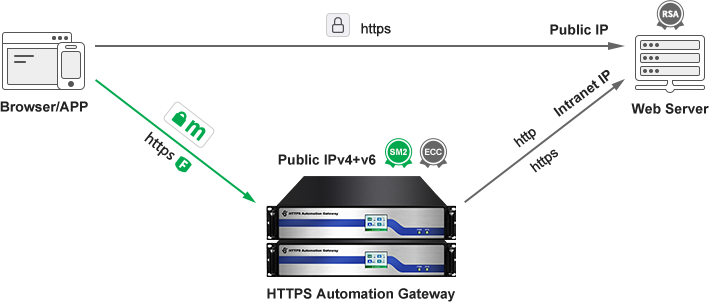
A recommended migration approach is to introduce the gateway alongside the existing HTTPS service:
- Deploy and configure the gateway.
- Configure website domains and backend server addresses.
- Test the new HTTPS service while maintaining the existing service.
- Gradually direct public website traffic to the gateway.
- After successful verification and DNS transition, retire the original public HTTPS access path where appropriate.
This approach enables a controlled transition without requiring major modifications to existing Web applications and network structures.
9.2 High Availability: Active-Active Deployment
For business-critical websites, a dual-gateway deployment is recommended. The two gateways can operate in Active-Active mode, sharing business traffic while providing mutual backup capability. When one gateway becomes unavailable, the other gateway can take over the required traffic processing functions, according to the configured failover mechanism.
Benefits include:
- Improved service availability.
- Shared traffic processing capacity.
- Reduced single-device dependency.
- Better utilization of hardware resources.
- More reliable HTTPS automation and WAF services.
9.3 Integration with Existing Security Appliances
For organizations already operating load balancers, SSL gateways, WAF appliances, and other network security devices, the Zotrus Gateway can be introduced as a dedicated HTTPS processing layer. The gateway assumes the SSL/TLS termination and certificate management responsibilities previously handled by the existing devices. The existing appliances can remain in service and continue their original security or traffic management functions.
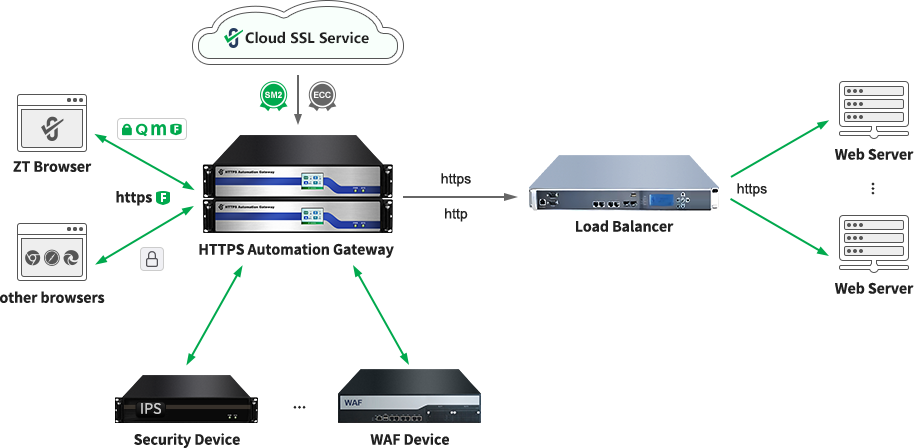
The deployment architecture can be designed according to whether the existing devices need to inspect decrypted HTTP traffic or continue operating with encrypted traffic.
9.4 Distributed Websites and Remote Origin Servers
The gateway supports both local forwarding and remote origin forwarding modes. Web servers may be located in different data centers, branch offices, or public cloud environments. As long as the gateway can establish network connectivity to the origin servers, it can provide external HTTPS services and configured security protection for those websites. For remote origin servers, HTTPS can be used for the gateway-to-origin connection to maintain encryption across the complete communication path.
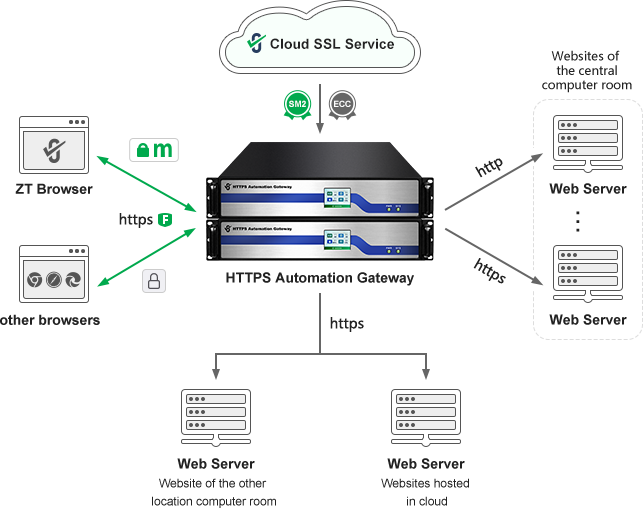
This deployment mode is suitable for organizations managing multiple websites distributed across different locations and cloud platforms.
9.5 Cloud Platform and Gateway Cluster Deployment
For public cloud platforms, e-government cloud platforms, and large enterprise environments managing hundreds or thousands of websites, multiple gateways can be deployed as a cluster. The gateway cluster distributes traffic among available devices and provides redundant processing capacity. When a gateway becomes unavailable, traffic can be redirected to other available gateways according to the cluster and network configuration.
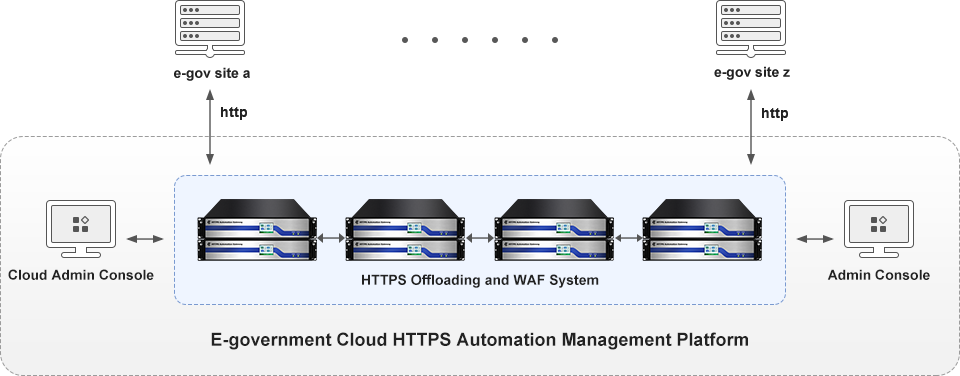
Cluster deployment is suitable for environments requiring high throughput, large-scale website management, and horizontal scalability.
10. Choose the Right Gateway for Your Website Infrastructure
One Gateway Platform. Multiple Hardware Configurations.
Zotrus HTTPS Automation Gateway provides different hardware configurations to accommodate websites of different sizes and traffic requirements.
The appropriate model should be selected according to two primary factors:
Both factors should be considered together. A website with high traffic may require a high-performance gateway even if the number of domains is small. Conversely, an organization managing many low-traffic websites may need greater domain capacity.
Gateway Selection Guide
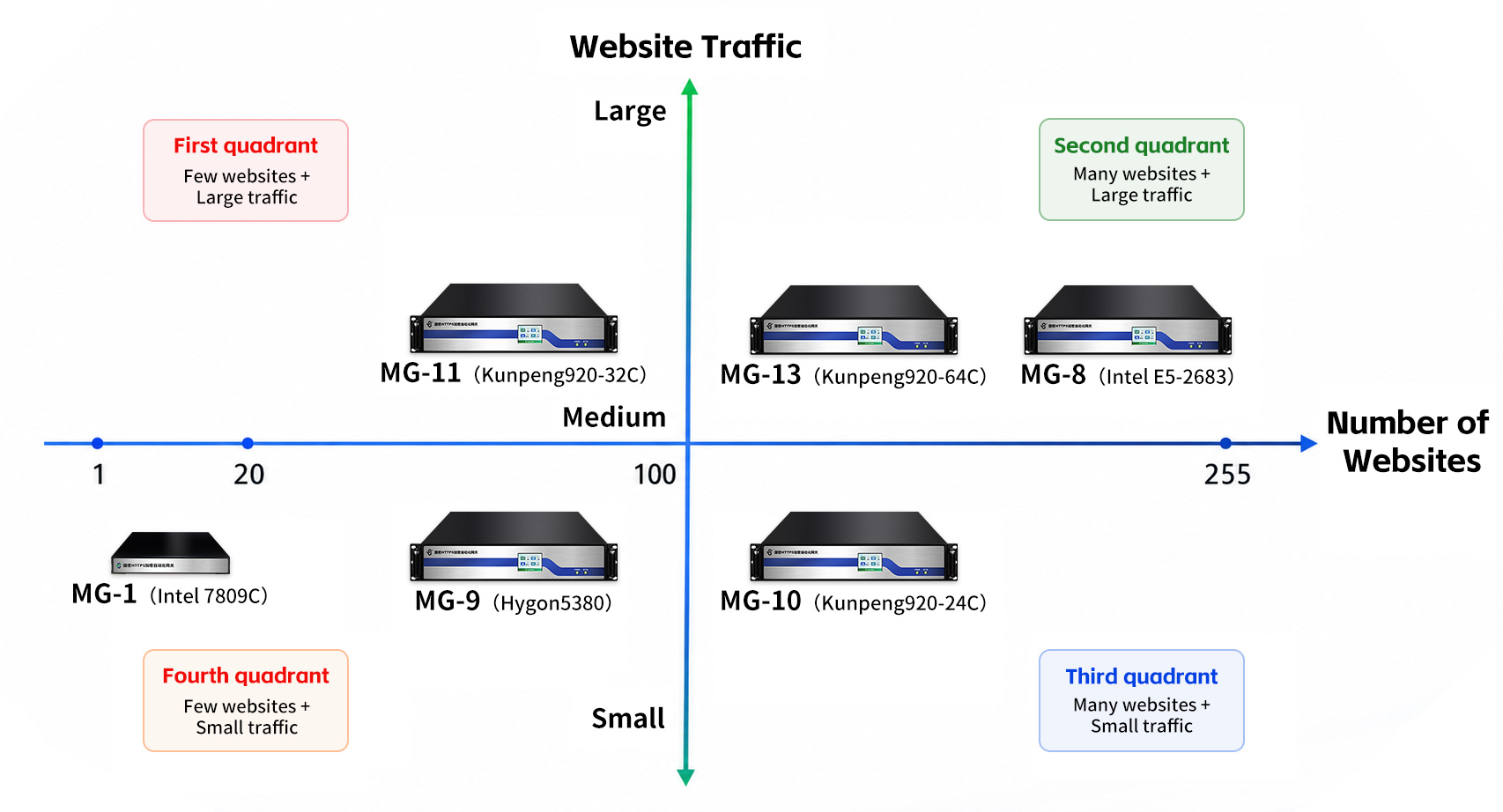
For high-traffic environments, model selection should be based on actual throughput, TLS handshake performance, concurrent connections, and expected traffic growth.
For organizations managing more websites than a single gateway can support, multiple gateways can be deployed in a cluster.
Need help selecting a model? Contact Zotrus with your estimated HTTPS traffic volume and website count for a recommended configuration.
11. Product Models and Technical Specifications
Zotrus HTTPS Automation Gateway currently offers six hardware configurations for different deployment requirements.
+ 4 × 10G
+ 4 × 10G
+ 4 × 10G
+ 4 × 10G
+ 4 × 10G
*Maximum throughput is based on four-port aggregation (MG-1-1 aggregates 4 Gigabit ports, while the rest are aggregated as 4 10-Gigabit ports, supporting more port aggregation). Actual performance depends on traffic characteristics, cryptographic algorithms, security policies, and deployment configuration. *
** All models can be expanded with 8 gigabit ports or 8 10-gigabit ports except MG-1-1
◆ Certificate Configuration
The gateway supports dedicated ECC and SM2 certificate autoconfigurations for website domains. Currently, the certificate is valid for 90 days and automatically renews every 80 days. In the future, it will automatically adjust according to the certificate validity policy.
The specific website domains supported by each gateway model are as follows:
- MG-1-1 supports up to 20 website domains.
- MG-9-1 and MG-11-1 supports up to 100 website domains.
- MG-10-1 supports up to 100 or 200 website domains.
- MG-8-1 and MG-13-1 support up to 100 or 255 website domains.
Each website can have its own certificate and private key. The gateway purchase includes five years of certificate automation service for the supported certificate configurations and website capacity. Hardware maintenance fees and certificate package fees will be charged after five years.
◆ Customization
Hardware and deployment configurations can be customized according to specific throughput, website capacity, cryptographic processing, network interface, and infrastructure requirements.
Contact Zotrus for detailed technical specifications and configuration recommendations.
12. Typical Application Scenarios
Zotrus HTTPS Automation Gateway is designed for organizations that need to automate HTTPS encryption and certificate management across multiple websites or business systems.
Typical applications include:
◆ Government and Public Sector
Automate HTTPS protection for government portals, e-government platforms, and public-facing digital services.
◆ Financial Institutions
Centralize HTTPS certificate management and cryptographic processing for financial websites and business applications.
◆ Large Enterprises
Protect multiple corporate websites, business portals, and distributed Web applications without modifying existing systems.
◆ Cloud and Data Center Operators
Provide centralized HTTPS offloading and certificate automation for large numbers of hosted websites.
◆ Education and Healthcare
Simplify certificate management and HTTPS deployment across institutional websites, service portals, and internal-facing applications.
◆ Web Hosting and Managed Service Providers
Manage HTTPS services for multiple customer websites through centralized gateway infrastructure.
13. Free ZT Browser: Bringing Cryptographic Agility and Digital Trust to the Client
ZoTrus provides ZT Browser as a complementary client-side product, extending the value of the HTTPS Automation Gateway beyond server-side cryptographic infrastructure to users' everyday browsing experience.
Built on Chromium, ZT Browser supports RSA, ECC, and SM2 cryptography, as well as two hybrid post-quantum key exchange algorithms: X25519MLKEM768 and SM2MLKEM768. It enables users to access websites using these cryptographic technologies and provides visible indicators showing whether an HTTPS connection uses SM2 or hybrid post-quantum cryptography.
Beyond cryptographic support, ZT Browser makes website security and digital trust more transparent. It displays certificate-based website identity information, Certificate Transparency details, and recognized WAF protection indicators, helping users better understand the security properties of the websites they visit. When ZT Browser displays the WAF indicator that the website is protected by Zotrus Gateway WAF, users can identify that the Zotrus Gateway and its built-in WAF are deployed in front of the website.
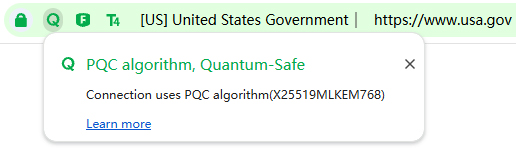
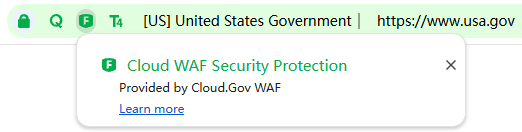
By providing ZT Browser, ZoTrus gives customers an additional way to experience and adopt SM2 and post-quantum cryptography, while making website identity and security information more accessible to end users. Together, the HTTPS Automation Gateway and ZT Browser connect server-side cryptographic automation with client-side security visibility, creating a more complete website security experience.
14. Why Zotrus HTTPS Automation Gateway?
Zotrus HTTPS Automation Gateway is more than an SSL/TLS offloading appliance. It automates the complete path from certificate supply and lifecycle management to HTTPS cryptographic application. With zero-change origin-server deployment, multi-CA automatic switching, adaptive multi-algorithm HTTPS, two hybrid PQC key exchange algorithms, HTTPS offloading, and built-in WAF, it helps organizations modernize their Web security infrastructure through a single gateway-layer upgrade.
Core value proposition: Zero-change deployment for existing origin servers (no ACME client required) | Dual-algorithm certificate automation | Multi-CA automatic switching for resilient certificate supply | Adaptive RSA/ECC and SM2 HTTPS | X25519MLKEM768 and SM2MLKEM768 hybrid PQC | Dedicated HTTPS offloading | Built-in WAF | Hardware-protected private keys.
Zotrus HTTPS Automation Gateway brings certificate lifecycle automation, cryptographic agility, HTTPS acceleration, and Web application protection together in a dedicated gateway.
◆ Automate Certificate Management
Reduce manual certificate application, deployment, and renewal operations.
◆ Protect Existing Investments
Modernize HTTPS without rebuilding existing Web servers or business applications.
◆ Support Cryptographic Evolution
Introduce RSA/ECC, SM2, and supported hybrid post-quantum algorithms through a centralized processing layer.
◆ Improve Infrastructure Efficiency
Move SSL/TLS processing to a dedicated gateway and let existing security appliances focus on their specialized functions.
◆ Simplify Enterprise Security Operations
Manage multiple websites through a unified gateway platform with flexible deployment and high-availability options.
◆ Free SM2+PQC browser: ZT Browser
The free ZT Browser extends SM2 and post-quantum cryptography (PQC) capabilities to the client side, while providing visibility into website certificate identities, Certificate Transparency information, and security protection status.
Automate Certificates. Automate HTTPS. Build Cryptographic Resilience.
Discover how Zotrus HTTPS Automation Gateway can simplify certificate management, modernize cryptographic capabilities, and improve the efficiency of your website security infrastructure.
Contact Zotrus for Product Information and Deployment Consultation.